Thermal Analysis
R-TECH Materials offers fast, reliable, and accurate thermal analysis services across the UK and Europe. We are UKAS accredited, so you can be confident in choosing us as your trusted thermal analysis service provider. To find out more, contact us today.
Thermal analysis techniques are important to a variety of industries including non-metallic materials such as polymer matrix composites and metallic materials. Understanding the physical and kinetic properties of materials at different temperatures is an important characteristic for design engineers when considering the end use of their products.
With investment into the latest state-of-the-art DMA, DSC and TMA equipment, R-TECH Material offers thermal analysis testing of your engineering materials. Using different techniques we can determine the glass transition temperature (Tg), Coefficient of thermal expansion (CTE), specific heat capacity, melting point and other properties.
Our thermal analysis capabilities include:
- Glass Transition Temperature (Tg)
- Coefficient of Thermal Expansion (CTE)
- Heat Deflection Temperature
Assured testing and materials expertise when safety, quality and integrity are the only option.
Click to download a PDF summary of our thermal analysis capabilities
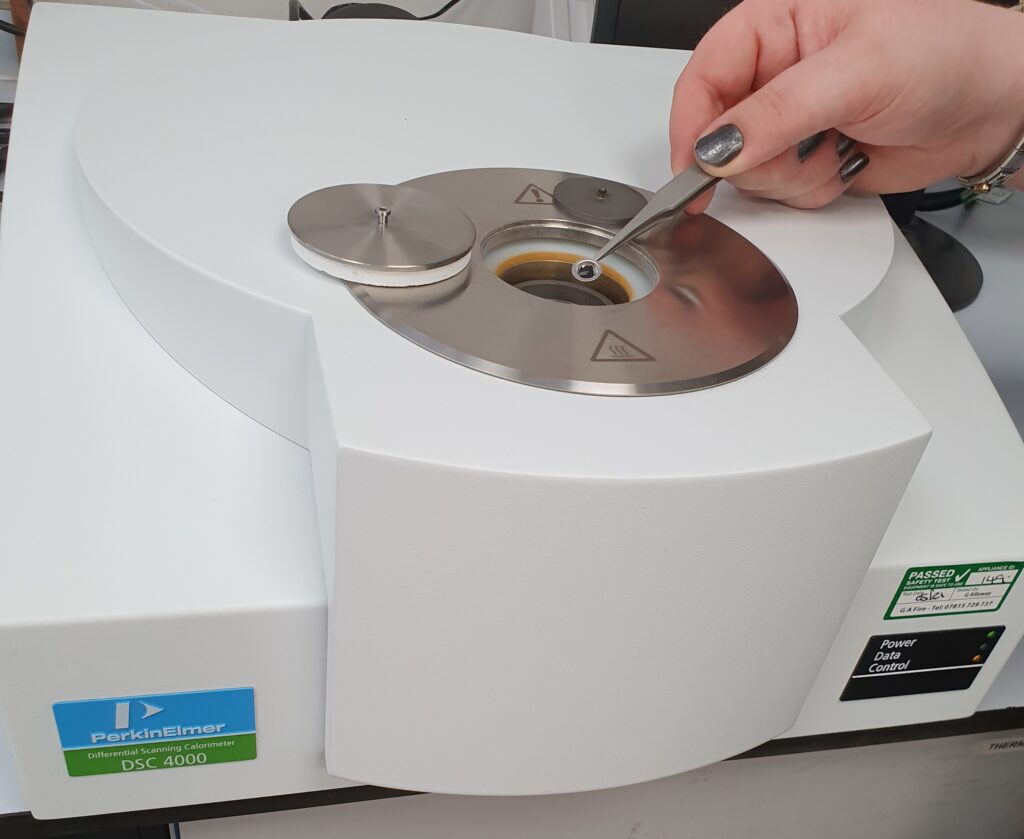
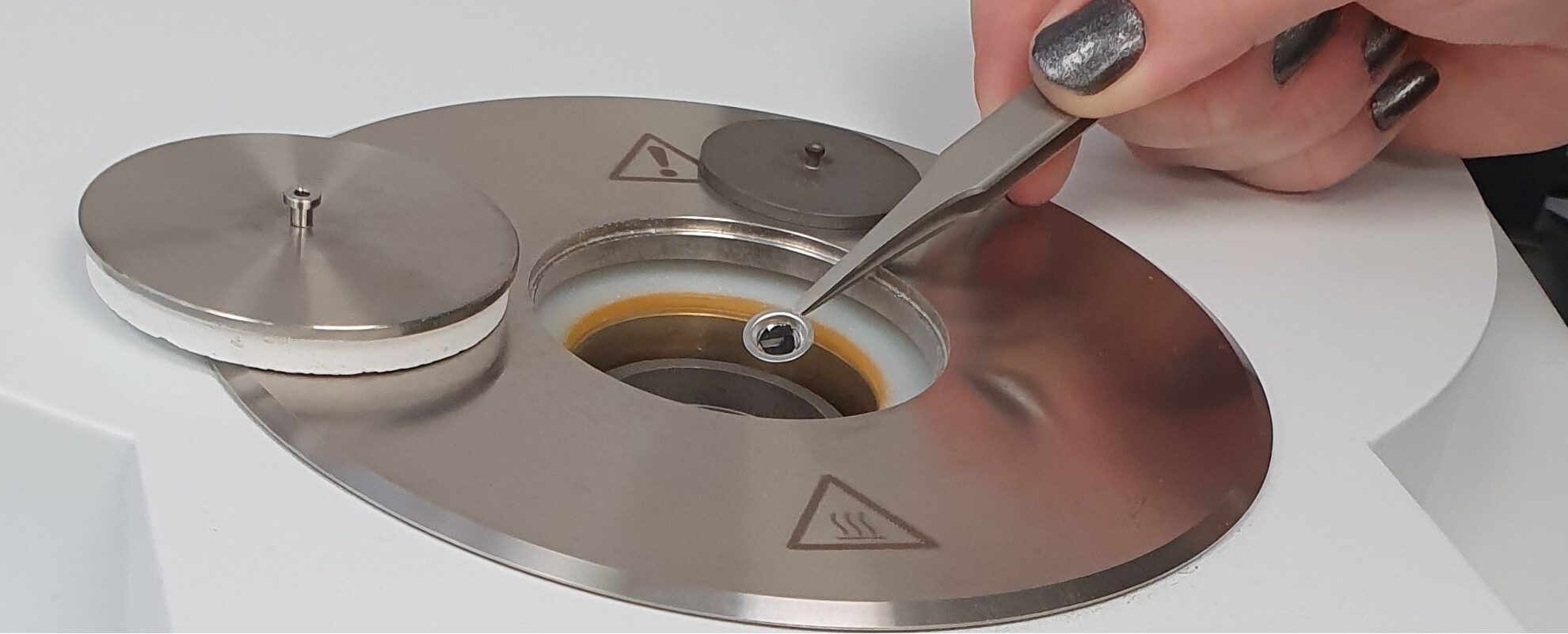
Differential Scanning Calorimetry (DSC)
DSC analysis provides information on the cure kinetics, specific heat capacity and glass transition temperature (Tg) of materials.
R-TECH offers testing on our Perkin Elmer DSC 4000 between -100 °C and 450 °C.
Dynamic Mechanical Analysis (DMA)
DMA analysis provides information on the glass transition temperature (Tg) and viscoelastic properties of materials.
R-TECH offers UKAS accredited testing of Tg between -196 °C to 400 °C using a Perkin Elmer DMA 8000 to ASTM D7078 and BS ISO 6721-11.
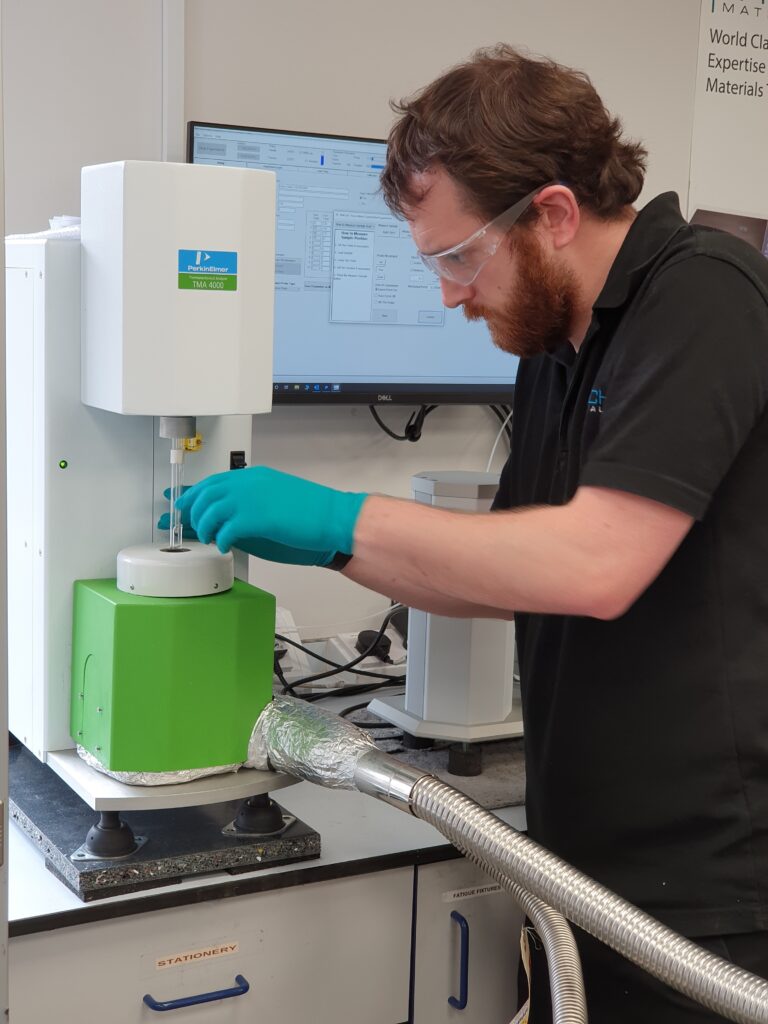
Thermomechanical Analysis (TMA)
TMA analysis provides information on the coefficient of thermal expansion (CTE) and glass transition temperature (Tg) of materials.
R-TECH offers UKAS accredited CTE testing between -150 °C and 800°C using a Perkin Elmer TMA 4000 to BS ISO 11359-1, BS ISO 11359-2 and ASTM E831.
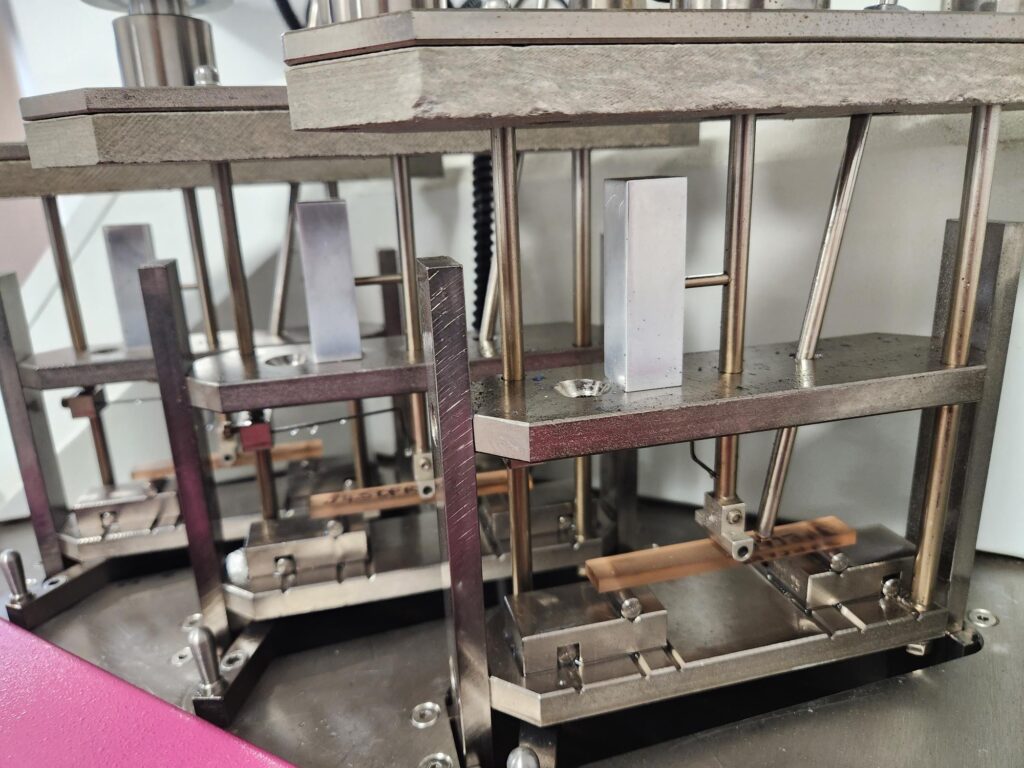
Heat Deflection Temperature
The heat deflection temperature (HDT), or temperature of deflection under load (TDUL), allows engineers to undestand the temperature at which a polymeric material begins to deform under a given load.A popular test for marine classification societies, such as Lloyd’s Register, this test can be conducted on it’s own or as part of a marine classification approval test programme.
R-TECH is able to offer UKAS accredited HDT testing to BS EN ISO 75-2 up to 180°C